
The Critical Raw Materials Act. What does this mean for the EU, and why is COFERMIN optimistic?

|

COFERMIN Chemicals

The EU has sent a clear signal with the publication of the CRMA. The goal: a more secure and sustainable supply of critical raw materials that are essential for the operation of industry and, above all, green technologies. As you know, demand for lithium and other critical raw materials such as cobalt, nickel, and manganese has skyrocketed due to the growing number of electric cars worldwide. This “white gold rush” is leading to a number of challenges, including Europe’s almost complete dependence on imports from countries such as Australia, Chile, and China.

The European law on critical raw materials is based on four pillars: setting clear priorities, building European capacity, increasing the resilience of supply chains, and investing in research and innovation. Targets for 2030 include covering 10% of annual extraction needs, 40% of processing needs, and 15% of recycling needs within the EU. The EU also wants to strengthen its monitoring capabilities through stress tests and promote sustainable investment. Another aspect is the promotion of a circular economy, including the recycling of raw materials. Internationally, the EU intends to promote win-win partnerships through the Global Gateway strategy and to establish a club for critical raw materials. This is important because the EU is heavily dependent on imports, with 97% of its magnesium requirements coming from China, for example. Through the law, the EU aims to increase its security of supply while paying attention to sustainability and human rights.

(Source: https://commission.europa.eu/strategy-and-policy/priorities-2019-2024/european-green-deal/green-deal-industrial-plan/european-critical-raw-materials-act_de)

The CRMA is a bold, necessary, and well-thought-out initiative and an ambitious legislative package…

…which aims to strengthen the value chain of critical raw materials in the EU and reduce dependence on imports. We at COFERMIN welcome this strategic direction. It addresses one of the core challenges of our time—the security of supply of essential materials such as lithium, cobalt, and nickel. It is a step in the right direction to reduce dependence on imports and diversify the supply chain. This policy shift will create a win-win situation for all stakeholders, from producers to consumers.

We also want to make our contribution in this context. Our expertise in the market and our deep dive into the requirements of raw material supply make us a genuine partner in untangling the complexity of the supply chain. We are actively involved in discussions with stakeholders and offer our insights as part of the solution.

The role of recycling: “Rethinking the Loop”

But the question remains: How can the EU achieve its goals? In my view, some of them seem rather difficult. As stated by DERA, despite these measures, the EU will probably only be able to cover 10-40% of its lithium demand by 2030. Complete self-sufficiency seems a long way off. This is a sobering but realistic assessment, which we share. However, battery recycling could play a key role in the future. At present, however, it is still in its infancy. With the necessary investments in technology and infrastructure, we at COFERMIN consider recycling to be a game changer in terms of security of supply.

The German Mineral Resources Agency (DERA) is a body of the Federal Institute for Geosciences and Natural Resources founded in 2010. Its mission is to ensure a secure, affordable, and sustainable supply of mineral resources for Germany. DERA assesses commodity markets and international supply sources in the context of the energy transition and future technologies. It informs companies and politicians about potential risks in the supply chain and supports government and corporate security measures. The team consists of experts from various fields who conduct analyses based on public and proprietary data.


(Source: https://www.deutsche-rohstoffagentur.de/DERA/DE/Home/dra_node.html)

The CRMA is an important step, but not the only one, on the path to a confident and sustainable raw materials policy in the EU. It requires the joint efforts of all players in the value chain, from political decision-makers to industrial companies. We are ready to contribute our expertise and know-how to this important undertaking. In my voluntary work with the Federal Association of German Economists and Business Administrators, I have repeatedly seen that political decisions are most effective when they are made in close consultation with industry. We should use this opportunity not only to secure the supply of critical raw materials, but also to promote a sustainable, green economy in Europe.
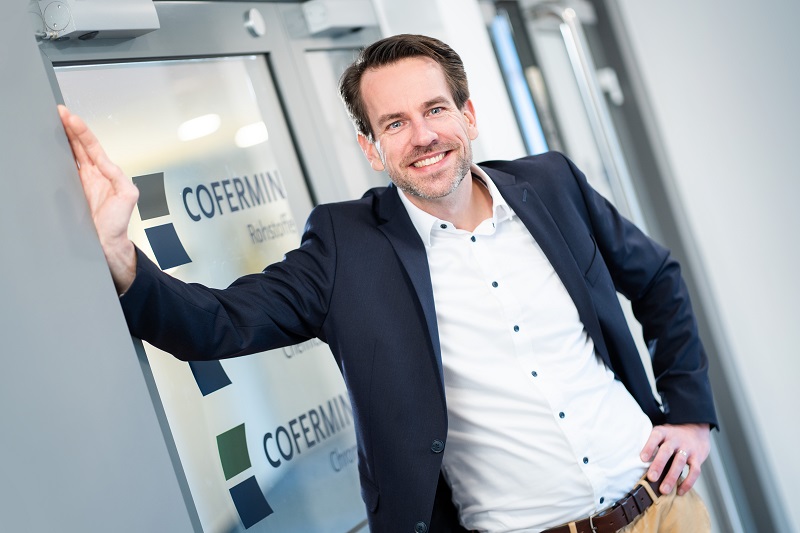
Benjamin
Konn
Sales & Marketing Manager
I have been working as a Product Manager at COFERMIN Chemicals for over a decade. After completing my Bachelor's degree in Business Administration at Düsseldorf University of Applied Sciences, I specialised in business development and project management. I found my professional home in Essen and took on the dynamic challenges of the chemical industry. In addition to my work, I was also active as an honorary member of the Federal Association of German Economists and Business Economists. My day-to-day work is characterised by the development of market strategies and customer solutions. I also greatly appreciate the valuable professional contacts.

|

COFERMIN Chemicals

The EU has sent a clear signal with the publication of the CRMA. The goal: a more secure and sustainable supply of critical raw materials that are essential for the operation of industry and, above all, green technologies. As you know, demand for lithium and other critical raw materials such as cobalt, nickel, and manganese has skyrocketed due to the growing number of electric cars worldwide. This “white gold rush” is leading to a number of challenges, including Europe’s almost complete dependence on imports from countries such as Australia, Chile, and China.

The European law on critical raw materials is based on four pillars: setting clear priorities, building European capacity, increasing the resilience of supply chains, and investing in research and innovation. Targets for 2030 include covering 10% of annual extraction needs, 40% of processing needs, and 15% of recycling needs within the EU. The EU also wants to strengthen its monitoring capabilities through stress tests and promote sustainable investment. Another aspect is the promotion of a circular economy, including the recycling of raw materials. Internationally, the EU intends to promote win-win partnerships through the Global Gateway strategy and to establish a club for critical raw materials. This is important because the EU is heavily dependent on imports, with 97% of its magnesium requirements coming from China, for example. Through the law, the EU aims to increase its security of supply while paying attention to sustainability and human rights.

(Source: https://commission.europa.eu/strategy-and-policy/priorities-2019-2024/european-green-deal/green-deal-industrial-plan/european-critical-raw-materials-act_de)

The CRMA is a bold, necessary, and well-thought-out initiative and an ambitious legislative package…

…which aims to strengthen the value chain of critical raw materials in the EU and reduce dependence on imports. We at COFERMIN welcome this strategic direction. It addresses one of the core challenges of our time—the security of supply of essential materials such as lithium, cobalt, and nickel. It is a step in the right direction to reduce dependence on imports and diversify the supply chain. This policy shift will create a win-win situation for all stakeholders, from producers to consumers.

We also want to make our contribution in this context. Our expertise in the market and our deep dive into the requirements of raw material supply make us a genuine partner in untangling the complexity of the supply chain. We are actively involved in discussions with stakeholders and offer our insights as part of the solution.

The role of recycling: “Rethinking the Loop”

But the question remains: How can the EU achieve its goals? In my view, some of them seem rather difficult. As stated by DERA, despite these measures, the EU will probably only be able to cover 10-40% of its lithium demand by 2030. Complete self-sufficiency seems a long way off. This is a sobering but realistic assessment, which we share. However, battery recycling could play a key role in the future. At present, however, it is still in its infancy. With the necessary investments in technology and infrastructure, we at COFERMIN consider recycling to be a game changer in terms of security of supply.

The German Mineral Resources Agency (DERA) is a body of the Federal Institute for Geosciences and Natural Resources founded in 2010. Its mission is to ensure a secure, affordable, and sustainable supply of mineral resources for Germany. DERA assesses commodity markets and international supply sources in the context of the energy transition and future technologies. It informs companies and politicians about potential risks in the supply chain and supports government and corporate security measures. The team consists of experts from various fields who conduct analyses based on public and proprietary data.


(Source: https://www.deutsche-rohstoffagentur.de/DERA/DE/Home/dra_node.html)

The CRMA is an important step, but not the only one, on the path to a confident and sustainable raw materials policy in the EU. It requires the joint efforts of all players in the value chain, from political decision-makers to industrial companies. We are ready to contribute our expertise and know-how to this important undertaking. In my voluntary work with the Federal Association of German Economists and Business Administrators, I have repeatedly seen that political decisions are most effective when they are made in close consultation with industry. We should use this opportunity not only to secure the supply of critical raw materials, but also to promote a sustainable, green economy in Europe.

Benjamin
Konn
Sales & Marketing Manager
I have been working as a Product Manager at COFERMIN Chemicals for over a decade. After completing my Bachelor's degree in Business Administration at Düsseldorf University of Applied Sciences, I specialised in business development and project management. I found my professional home in Essen and took on the dynamic challenges of the chemical industry. In addition to my work, I was also active as an honorary member of the Federal Association of German Economists and Business Economists. My day-to-day work is characterised by the development of market strategies and customer solutions. I also greatly appreciate the valuable professional contacts.
Jetzt Kontakt aufnehmen
+49 201-799872-14
konn@cofermin.de